CONTRIBUTIONS

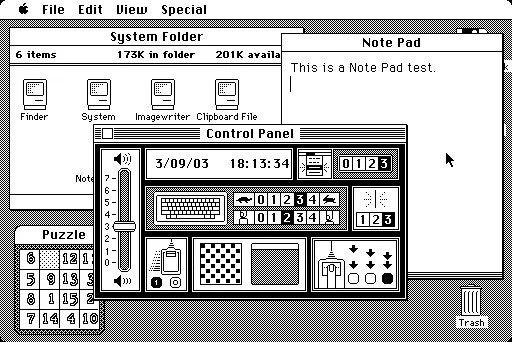
Macintosh interface screenshot


MACINTOSH INTERFACE

Susan Kare’s most significant contribution to the field of typography was the overall user interface of Macintosh systems. She created icons, typefaces, and layouts which very well depicted a simple, readable, interface, that is still partially used and looked at in today's designs. When creating the interface, Susan didn’t only focus on readability, she also helped form a comprehensive visual identity for the Macintosh systems, allowing it to become a more welcome, less complex interface in which users can just point and click on icons.

Included as part of her user interface creations, she made the typeface Chicago, which is arguably her most well-known piece of work. As described by Susan, “the goals were explained to me that it (the Macintosh) was a computer for people who were not computer literate so your mom could use it”. She had to make a typeface that was not difficult to read, while also taking in the limitations of the lack of resolution on the mediums at the time. The font curated the ability to be eligible at small sizes, as well as continuing on with the approachable, simple, look that Macintosh systems were going for at the time. Beyond Chicago, her work extended to a variety of other screen icons and fonts, shaping the early visual identity of Apple. Her designs were pivotal in transforming the way users interacted with technology. By thinking of type and icons as integral parts of the overall user experience, Kare helped to shift the focus from purely functional design to a more holistic approach that combined usability with personality. This was a significant departure from previous design philosophies, where typography was often considered secondary to function.
INFLUENCE

Susan’s work on the Macintosh interface has formed a lasting influence on the field of typography. When taking into consideration how she thought while designing her iconic fonts and icons, she heavily incorporated the idea of what the users might think, or how users might interpret her designs, in order to make them as clear and friendly as possible. This is a form of interaction design, as she looked more so into how we, as users, interact with technology, which is still an important aspect of user centered design today.

Not only did she impact the future of interface design as a whole, she also showed a great example of how to create an identity for a brand, using different icons, imagery, and type. With her use of these three entities, she created a clear sense of ease while using Macintosh devices, which is still seen in these devices to this day. The Macintosh became a symbol of user-friendly design, and much of that was thanks to Kare’s work in making technology feel more approachable and less intimidating.

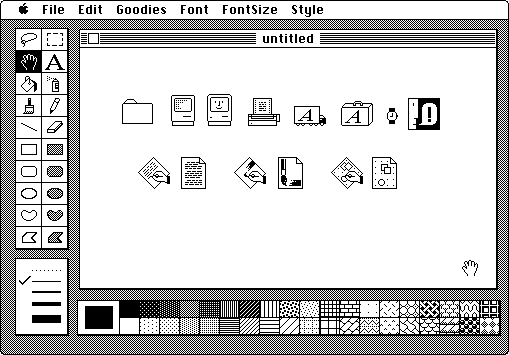
Susan’s influence extends well beyond the early Macintosh. Her emphasis on the usability of typography and icons in digital spaces laid the groundwork for modern operating systems, including Apple’s iOS and macOS, as well as other platforms like Google’s Android. The principles of legibility, clarity, and simplicity that she utilized are core to today’s digital design philosophies. Additionally, her work on bitmap fonts and screen optimization has been instrumental in the development of scalable typefaces, and the principles she established are evident in fonts and UI elements across a range of devices and platforms.

Macintosh apps screenshot
TYPEFACE >